Power Outages: What It Means and What to Do
When the power drops at a Haberfield home, the first question is always whether the fault is out on the grid or inside your own walls. We help you work that out and put right anything on your side, so call (02) 9134 9024.
What a Power Outage Actually Means
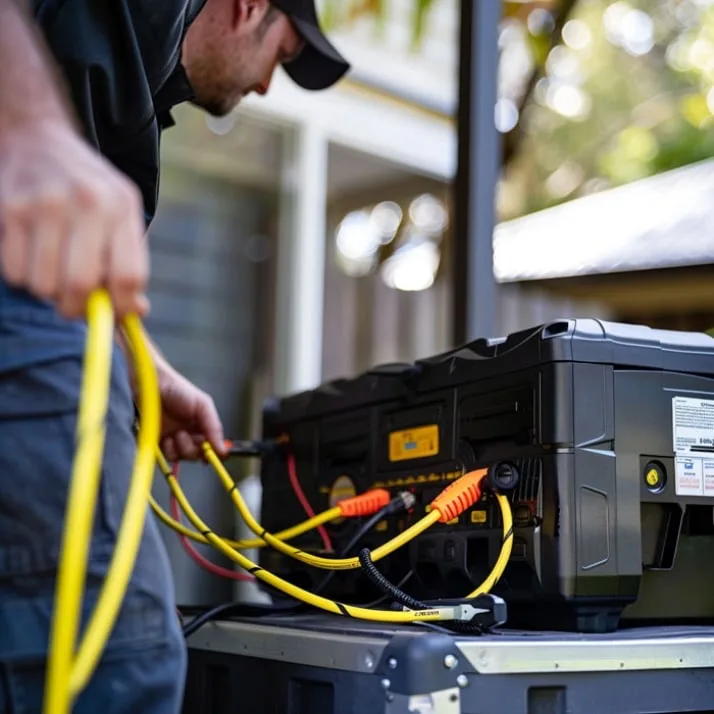
A power outage simply means a circuit, or your whole home, has lost supply. The cause sits in one of two places: out on the network, or inside your property from the main switch onwards.
That split is the key to everything that follows. A network outage is the grid's problem to restore, while anything from your switchboard in is ours.
Most outages fall into the first group and come back on their own. The ones worth a closer look are partial: one room dark, or half the house out while the neighbours are fine.
A partial outage almost always points at your own wiring or board. It is telling you a circuit, a main switch or a safety switch has done something, and that something has a cause.
When a Power Outage Is Urgent
A quiet outage with no other symptoms is rarely an emergency, especially if the whole street is out and it is clearly the network. Most of the time you simply wait.
Treat it as urgent, though, if the outage arrives with any of these:
- A scorched, melting-plastic odour near the switchboard or a wall
- Sparks, a bang or a visible flash when the power dropped
- Heat, buzzing or scorching at the board itself
- Part of the house repeatedly cutting out and coming back on its own
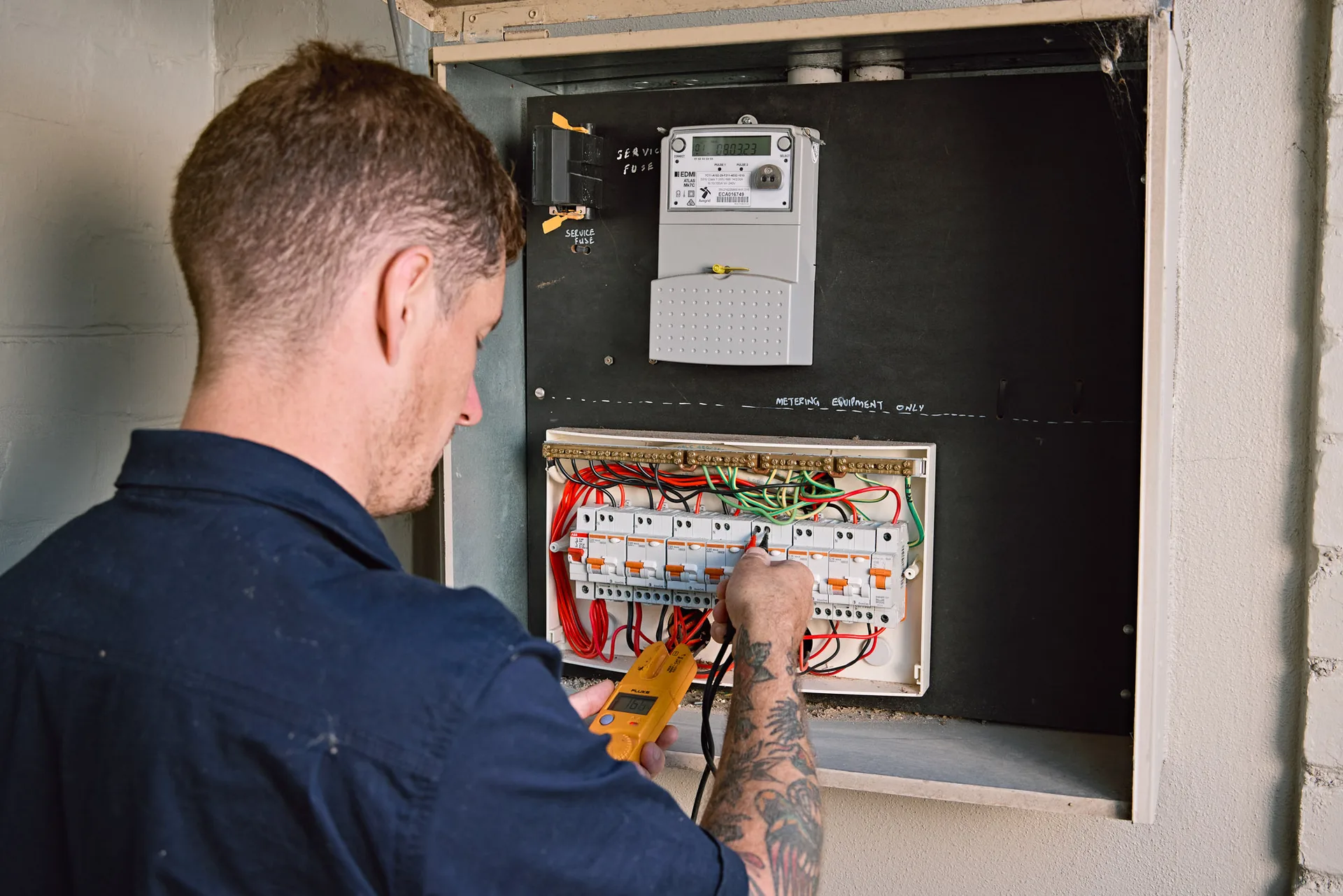
Those signs mean a fault, not a simple loss of supply. Turn the main switch off, keep clear of the board, and call a licensed electrician.
If it is just darkness with nothing else wrong, you can safely wait a little while and rule out a network outage first.
Your House or the Whole Street
Before anything else, it helps to know which side of the meter the problem is on. This one check tells us how to respond.
- Look up and down the street. Neighbours also dark and streetlights off means a network outage, and supply will come back on its own.
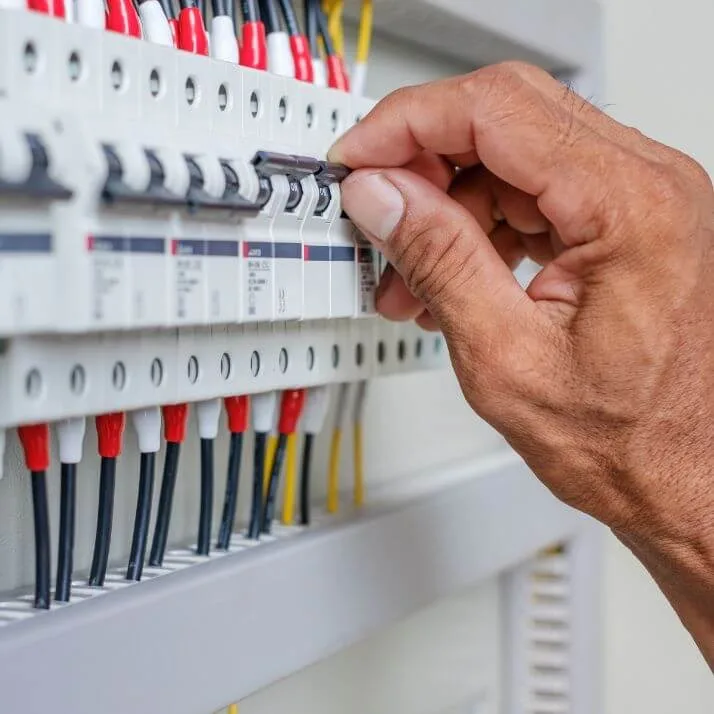
- Check your own board. With just your place affected, see whether the main switch or a circuit has flipped, without touching anything inside the board.
- Notice the pattern. One room out points to a single circuit; the whole home out while the street is fine points to your main switch or supply connection.
A network outage leaves nothing to fix inside your home. A fault confined to your place, on the other hand, is squarely our work, and we will be out to you quickly.
What Usually Causes It
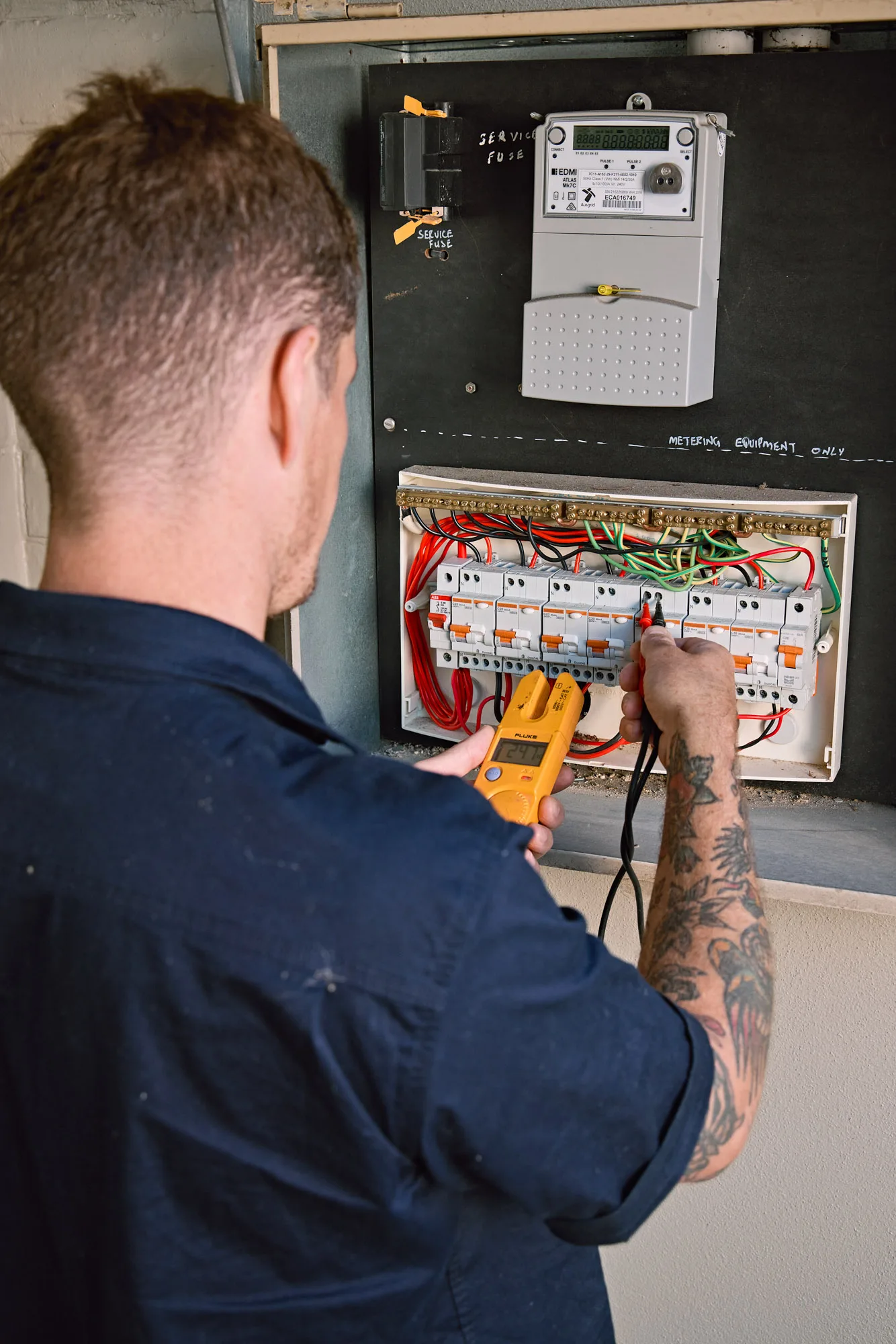
Once we have confirmed the trouble sits inside your property, the cause is usually one of the following.
- A tripped safety switch or breaker. Protection has cut the power because of a circuit fault, and that fault needs finding before anything is reset.
- A failed main switch. The main switch itself can wear out and drop the whole home, common on older boards.
- An ageing fuse or board fault. A worn fuse holder or a loose connection at the board can take out a section of the house.
- An overloaded circuit. Too much drawing at once trips the protection and darkens that part of the home.
- Damaged or damp wiring. Water reaching a connection, or a deteriorated cable, can cause an intermittent loss of power.
Three Safe Steps To Take Now
You can safely do a few things while you wait, all of them well away from the board.
- Check whether the street is out too, so you know at once whether the problem is the network or your home.
- If your place alone is affected and something smells or looks wrong, kill the main switch and leave it down.
- Unplug sensitive electronics so they are protected when supply returns, then call and tell us what you have seen.
How We Fix a Power Outage
We start by confirming where the fault sits, then work from the board outwards until the supply is restored properly.
We test the incoming supply and board. We check the main switch, the fuses or breakers and the connections, so we know whether the fault is at the board or further along a circuit.
We track down the faulty section. Bringing the home back up circuit by circuit shows us which line or fitting is responsible.
We repair and restore. We put the cause right, fit the correct replacement for any failed switch or breaker, and check the whole home holds power under load. The work meets AS/NZS 3000, and notifiable jobs come with a Certificate of Compliance.
Preventing the Next Power Outage
You cannot stop a network outage, but you can cut the partial outages that come from your own board. A few steps make a real difference.
- Replace a tired board and worn main switch by modernising the switchboard, so one fault no longer takes out half the house.
- Have fault protection fitted so a problem trips cleanly rather than causing a messy partial blackout.
- Ease demand by adding outlets where you need them, so one overloaded circuit is not dropping a room.
- Have ageing wiring inspected before a loose connection becomes a repeat outage.
Why Haberfield's Housing Makes This Common
Partial outages turn up more in older suburbs, and Haberfield is squarely one of them. Much of the housing is pre-1940 stock, and a good deal of it still runs on the original main switch and board it was built with.
A main switch that has quietly done its job for decades can finally give out, dropping the whole home in one go. On an original board, a single tired connection can darken a section without any warning at all.
That is why a partial outage in a period home is worth a proper look rather than a quick reset. The reset hides the fault; finding it stops the next outage.
Other Faults We Chase Down
An outage on your side often sits alongside other warning signs on the same board. A circuit breaker that keeps dropping out or a fuse that has blown is a good reason to start there.
We look after Haberfield homes and reach out through Leichhardt, Ashfield and Croydon.

Call Now About Your Power Outage
If the power is out and you are not sure why, we will sort out where the fault sits and repair whatever belongs to your home. First-time customers also take $50 off their first service.
Reach us on (02) 9134 9024 for a fast response, often same or next day.
Common questions
Haberfield Power Outages FAQs
Common questions we hear from Haberfield homeowners when the power goes out.
Do old fuses and boards make outages more likely?
Yes, an ageing board with worn fuses or a tired main switch can drop a section of the house without warning. Older gear also handles today's loads poorly, so partial outages become more frequent as a board ages.
How long does it take to fix an outage on my side?
A straightforward fault, like a failed main switch or a single dead circuit, is often sorted in a visit once we have tested it. A larger fault in the wiring or board can take longer, and we will give you a written price before starting.
Should I turn off the mains during an outage?
If you have a burning smell, sparks or a fault you can see, switch off the main switch and leave it off. If the whole street is simply dark, you can leave the mains on and wait for supply to return.
Can a power outage cause a fire?
The outage itself will not, but the fault behind a partial outage sometimes can, especially arcing at a loose connection or an overloaded circuit. That is why a repeat or partial outage is worth having checked.
Will my safety switch protect me during a fault?
A safety switch cuts the power fast when current leaks to earth, which is exactly the kind of fault that can trip part of your home. If your board has no safety switches, that protection simply is not there yet.
Is the outage caused by my appliance or my wiring?
If power drops the moment one appliance runs, that appliance is the likely trigger. If a circuit or the whole home goes with nothing obvious running, the fault sits in the wiring or the board and needs testing.