Blown Fuse in Your Haberfield Home
A blown fuse leaves part of your Haberfield home without power and leaves you guessing, but it is usually a simple fix once we know the cause. Call (02) 9134 9024 and we will track it down.
Blown Fuse, Explained in Plain English
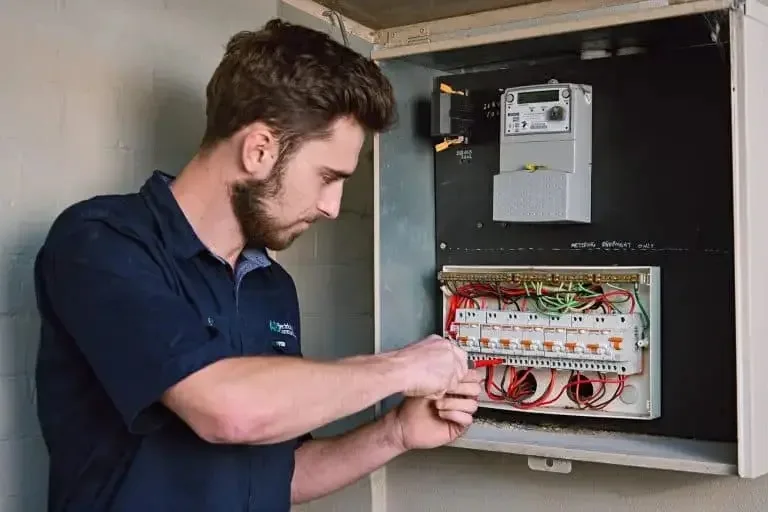
A fuse is a deliberate weak link. It carries the current to a circuit, and when that current climbs too high, a thin metal element inside melts and breaks the connection.
That is the fuse doing exactly what it was built to do. Cutting the power protects the cable in your walls from overheating before it can become a hazard.
Think of it as a sacrificial part. It gives way on purpose so the wiring behind it does not have to.
The catch is that a fuse only works once. A modern circuit breaker resets, but a blown fuse stays dead until the element is replaced or the fuse wire is renewed by hand.
So a blown fuse carries two messages at once. The immediate one is that a circuit has lost power, and the more important one is that something drew far more current than the circuit was meant to carry.
Finding out why is the part that matters. A fuse that has gone once may never go again, or it may be the first warning of a fault that is only going to get worse.
Is a Blown Fuse Dangerous?
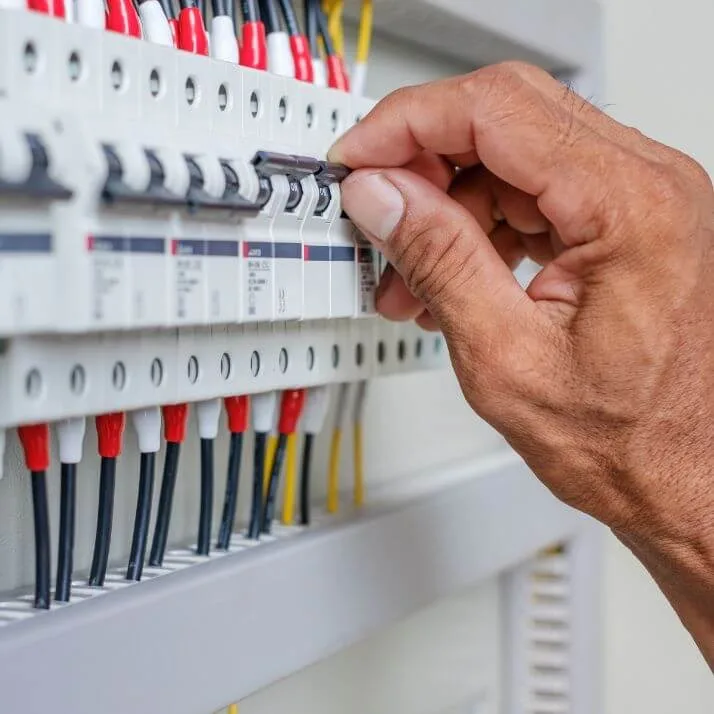
A single blown fuse is not usually an emergency. The fuse has already done the safe thing and disconnected the circuit, so the immediate risk is low.
What changes the picture is what comes with it. Treat these as reasons to stop and call:
- A scorched or melting-plastic smell drifting from the fuse box or a nearby wall
- Scorch marks, discolouration or heat around the fuse holder
- A fuse that goes again the instant you replace it, with nothing switched on
- Any buzzing, crackling or warmth from the board itself
Those signs point to a fault in the cabling or a join, not just a circuit carrying too much. Keep that circuit switched off and get a licensed electrician in.
If the fuse simply blew once when several big appliances ran together, it can safely wait a day or two. Do not fit a heavier fuse wire to force it back on.
The Most Likely Causes
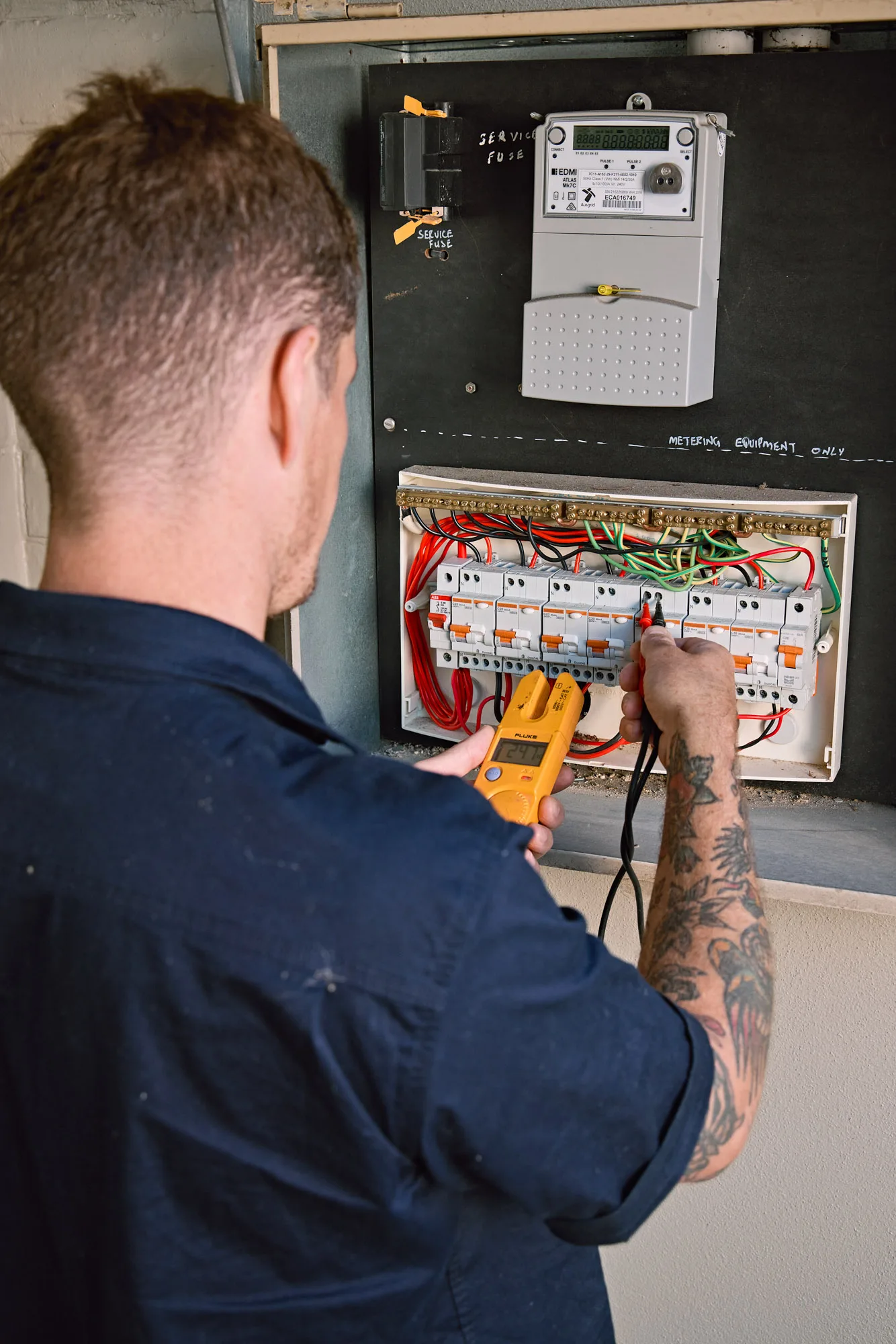
Most blown fuses trace back to one of a handful of causes. Here they are, roughly from the most common to the least.
- Overload. More appliances pulling from a single circuit than it was rated for, so the current climbs past what the fuse allows.
- A faulty appliance. A failing motor, element or lead can suddenly draw far more current than normal and take the fuse with it.
- A short circuit. A live wire touching a neutral or earth, often from damaged cable or a cracked fitting, drives a huge current for a split second.
- Ageing fuse wire. Original fuse elements grow brittle over the decades and give way under loads they once handled easily.
- Moisture in a fitting. Water or damp reaching a connection, common with outdoor points and old seals, creates a leakage path that blows the fuse.
- A tired connection. A loose or corroded join heats up under load and can eventually take the circuit down.
Three Safe Steps To Take Now
There are a few safe things you can do before we arrive. None of them involve opening the switchboard.
- Switch off and unplug the appliances on the dead circuit, so nothing draws power the moment it is restored.
- Check whether it is one room or the whole house, which tells us straight away whether it is a single circuit or the main supply.
- Leave the fuse and the board alone, and call us with what you have noticed so we arrive ready for the fault.
How We Fix It, Step by Step
We find the reason the fuse blew before we put power back, rather than just replacing the element and moving on.
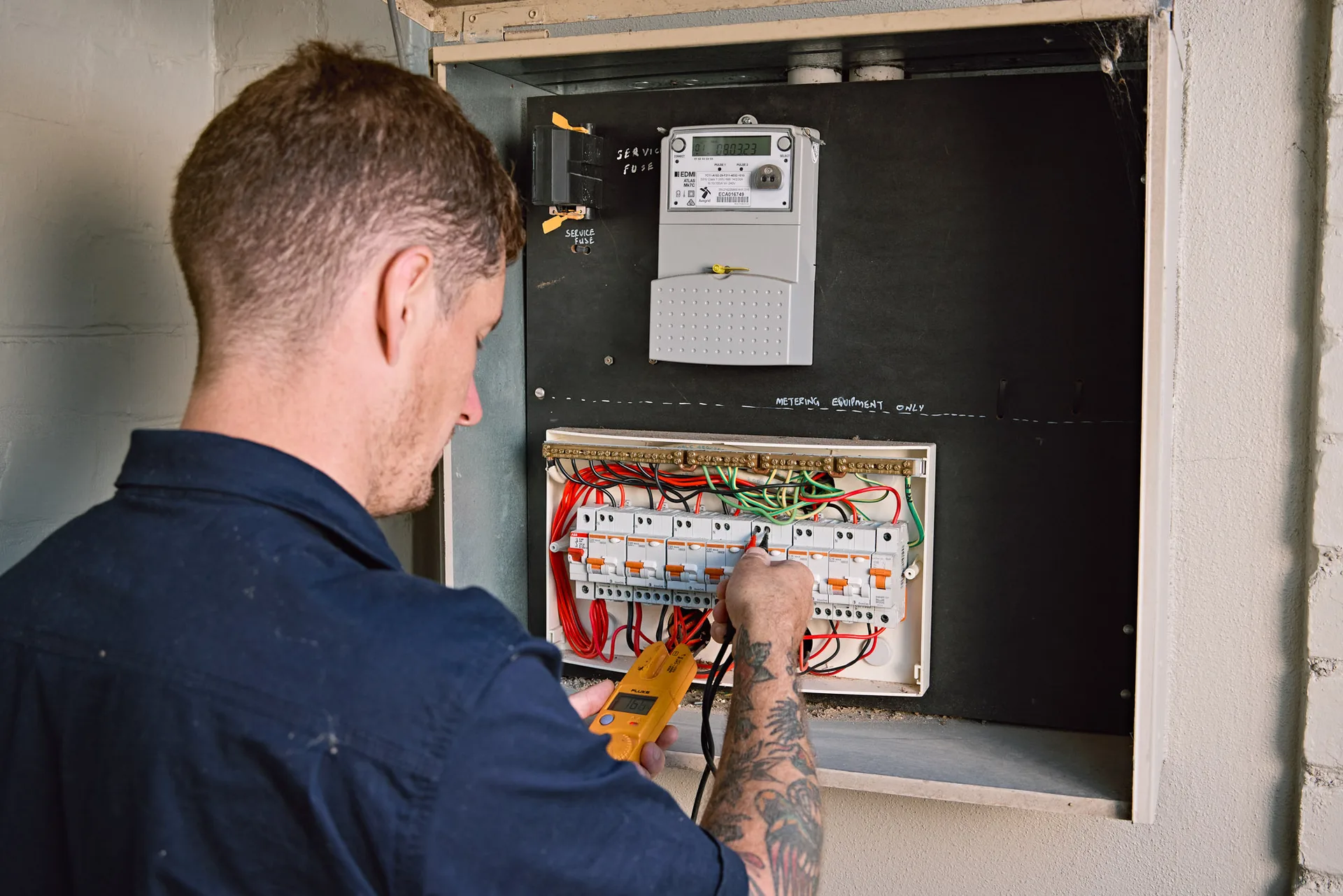
We test the dead circuit. With the fuse out, we check the wiring for a short, an earth leak or a damaged section, so we know whether the trouble sits in the cabling or in something plugged in.
We isolate the cause. We reconnect and load the circuit in stages until the specific fitting, lead or section shows itself.
We repair and rate it correctly. We fix the fault, fit the right fuse or, where it makes sense, recommend a modern breaker, all to AS/NZS 3000. Notifiable work is signed off with a Certificate of Compliance.
Preventing the Next Blown Fuse
A fuse that goes over and over is a sign the circuit is working too hard or something is wearing out. A few things stop it recurring.
- Retire a tired ceramic board for a modern one when you upgrade the switchboard, so faults trip a breaker instead of consuming wire.
- Add safety switches on your circuits, which cut the power on a fault far quicker than any old fuse.
- Ease the load by adding more power points or splitting heavy appliances across separate circuits.
- Have ageing wiring checked before it fails, especially in a home that has never been rewired.
The Haberfield Pattern We Keep Seeing
Plenty of homes around here still depend on original rewireable ceramic fuses, the type you rewire by hand rather than reset. Most of Haberfield's houses are pre-1940 stock laid out when the suburb was first subdivided, and a fuse board of that age was never meant to feed a modern kitchen.
You can read the timeline off the streetscape. The former post office on Ramsay Street dates to 1912, and plenty of the homes around it carry electrics of much the same generation.
When one of those boards drops a fuse under a heavy load, the answer is rarely the fuse itself. It is lifting the board to a standard that suits how the house is lived in today.
Nearby Suburbs and Related Faults
A blown fuse rarely arrives alone, and the fault beside it tells us more about the board. When a circuit breaker that will not stay on or lights that flicker show up too, that pattern usually means a circuit under real strain.
Our local team covers Haberfield and reaches out through Summer Hill, Leichhardt and Ashfield.

Call Us Today, We Will Sort It
A blown fuse is quick to put right once we know why it went. Ring (02) 9134 9024 and our local team will pin down the cause and sort it, often same or next day.
New customers also get $50 off a first service with us.
Common questions
Haberfield Blown Fuse FAQs
A handful of things Haberfield homeowners ask us most about blown fuses.
Why does a fuse only blow when certain appliances run?
A fuse blows when the current through it climbs past its rating, and heavy appliances like a kettle, heater or oven are what push it there. If yours goes every time one particular device switches on, that circuit or that appliance is the place to look first.
Can I keep using the circuit while I wait for you?
Leave that circuit switched off until we have looked at it. A fuse blows for a reason, and forcing more current through the same fault is how a warm wire becomes a scorched one.
Do old fuses make the problem worse?
Original ceramic rewireable fuses give you no warning and no easy reset, so people tend to fit heavier fuse wire to stop the nuisance. That defeats the whole protection and is a common reason older boards overheat.
Can a blown fuse cause a fire?
A fuse doing its job actually prevents fires by cutting the power. The danger is a fuse that keeps blowing on a real fault, or one that has been over-rated with thicker wire so it no longer trips when it should.
How do you find what caused the fuse to blow?
We test the circuit under load, isolate each section and check the fittings and cable until the fault shows itself. Finding the actual cause beats swapping the fuse and hoping, which just sends you back to square one.
Can I replace the fuse wire myself?
Under NSW law, work inside your switchboard has to be done by a licensed electrician. Rewiring a fuse yourself risks a shock, and getting the rating wrong removes the very protection the fuse is there to provide.