Overloaded Power Points in Your Haberfield Home
If your power points run warm, your powerboards are stacked high, or a circuit keeps dropping out when a few things run together, that circuit is being asked to do more than its design allows. It's a common, fixable fault in older homes, so give (02) 9134 9024 a ring and we'll take a look.
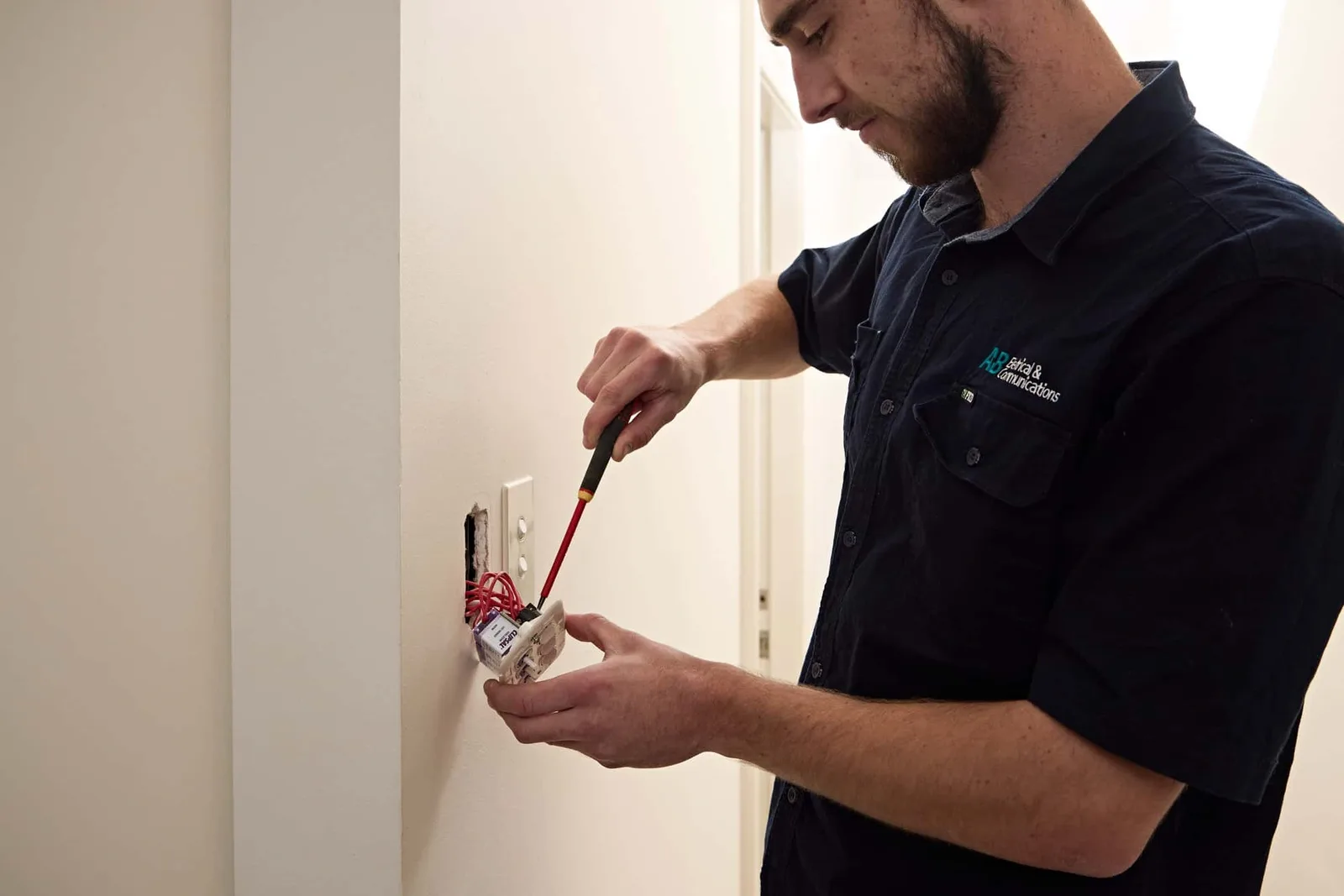
What Overloaded Power Points Actually Mean
An overloaded power point isn't a broken part. It's a circuit being asked to carry more current than it was designed to deliver.
Every circuit in your home has a limit, set by the cable size and the breaker protecting it. Plug enough hungry appliances into points on that one circuit, and their combined draw creeps toward that limit.
Push past it and things heat up. The cable warms, the outlets warm, and a healthy circuit breaker trips to stop the run before anything cooks.
So overloading is really a load problem, not a wiring fault. The wiring is fine, but there's too much demand stacked onto too few circuits.
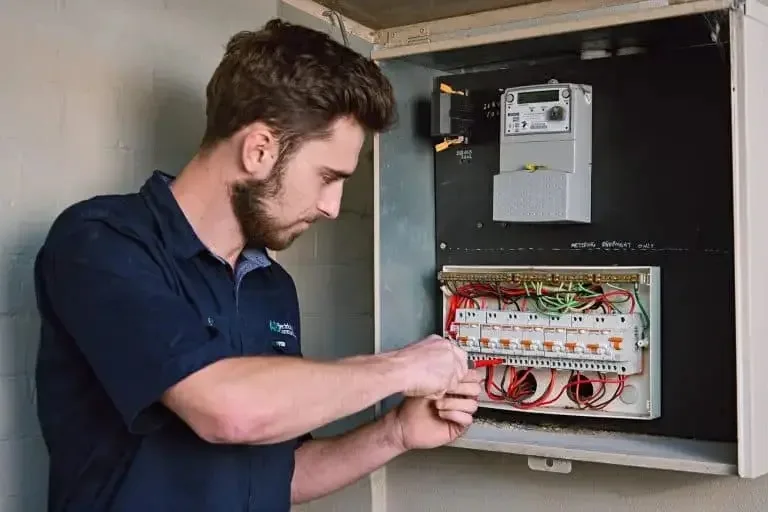
Common Causes of Overloaded Power Points
Overloading usually comes down to more demand than the original circuits were ever planned for.
- Too few outlets in a room, so everything funnels through one point and a powerboard.
- High-draw appliances doubled up, like a heater and a kettle sharing a single circuit.
- Daisy-chained powerboards, one plugged into another until a single socket feeds a whole corner.
- A circuit built for a lighter era, now running a home office or a modern kitchen it never anticipated.
- Portable heaters and dryers in winter, when seasonal load pushes a circuit that coped all summer.
Should You Worry? An Honest Answer
An overloaded circuit sits in the middle: not usually an instant emergency, but not something to keep living with either.
A breaker that trips under heavy load is doing its job, and that's the safer end of the scale. The circuit is protecting itself before the wiring gets hot.
The worrying signs are when heat shows up without a trip: a point or plug that's warm to the touch, a faint smell, a faceplate discolouring, or a powerboard that feels hot. Those mean the load is cooking something rather than cutting out.
If you're seeing heat, treat it as urgent. Stop using that point, turn its circuit off at the switchboard, and give us a call before you plug anything back in.
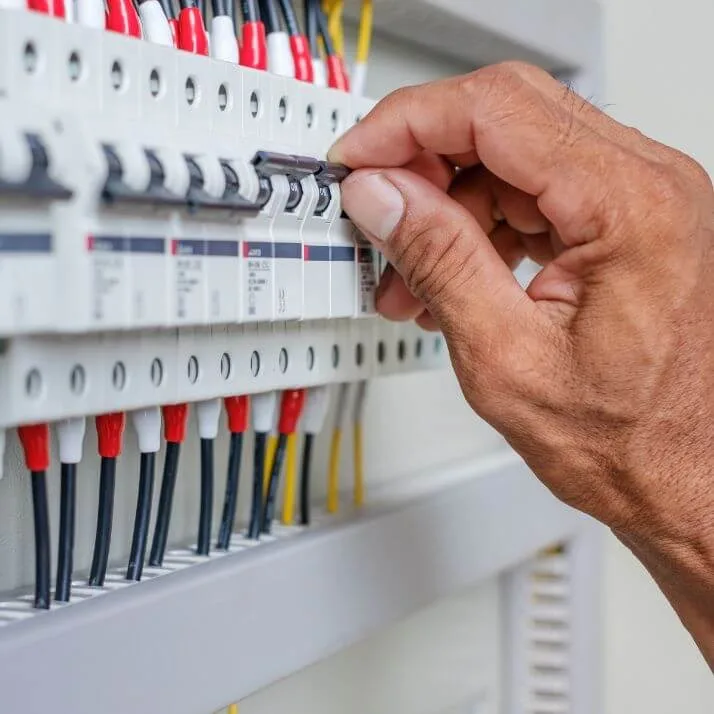
What To Do Right Now
A few safe moves ease the strain until we get there. Not one of them means opening up a socket or the switchboard.
- Unplug what you can from the busiest points, especially heaters, dryers and anything drawing heavy current.
- Spread the essentials you must keep running across outlets on different circuits, in different rooms.
- If a point or board feels warm, stop using it and flip off the breaker feeding that run.
- Call (02) 9134 9024 so we can work out whether you need more circuits, more outlets, or both.
How We Fix Overloaded Power Points
We fix overloading by matching your circuits to how you actually use the home, not by telling you to unplug things and hope.
First we work out what's loading each circuit, and by how much. Testing shows us which runs are near their limit and which have room to spare.
From there the fix depends on the home. Sometimes it's adding a dedicated circuit for a heavy appliance, sometimes fitting more outlets so load spreads, and sometimes a board with modern breakers sized correctly for the job.
All of it meets the AS/NZS 3000 wiring rules, and a notifiable job finishes with its compliance certificate lodged. The aim is a home where normal daily use never has to tiptoe around a circuit.
Why Haberfield's Housing Makes This Common
Back when Haberfield's homes went in, a room needed a light, a heater and maybe a wireless, so many were laid out on just a handful of final circuits.
Those same circuits now feed rooms full of screens, chargers, kitchen gadgets and heating that no original plan accounted for. The wiring didn't shrink, but the demand on it grew several times over.
Because these solid double-brick homes hold heritage protection, adding outlets and circuits is careful, considered work rather than a quick chase through a plasterboard wall. That's part of why so many households here lean on powerboards instead, which is exactly what tips a circuit into overload.
Other Faults We Chase Down
Overloading often shows up alongside its cousins, so if you're also dealing with a melted outlet or a breaker box making noise, read those through as well.
We sort out overloaded circuits throughout the Inner West. Haberfield keeps us busy, and we're regularly over in Croydon and down through Ashfield too.
Prevention Beats Repair
Keeping a circuit off the edge of overload is mostly about giving your home enough capacity for how you live. A few things make a lasting difference.
- Have extra sockets fitted in the rooms where powerboards multiply, so load has somewhere to go.
- Ask us to put heavy appliances on their own dedicated circuit rather than sharing.
- Look at a board upgrade if yours is old, so breakers protect each run properly.
- Book an electrical check if you're renovating or adding appliances, before the extra load goes on.

Book an Electrician Today
Overloaded circuits are easy to keep ignoring until a point runs hot. Call (02) 9134 9024 or drop us a line, tell us what's tripping or warming up, and we'll give your home the capacity it needs.
Common questions
Haberfield Overloaded Power Points FAQs
The things people most want to know when their outlets and boards are working overtime.
Will a safety switch protect me from an overloaded power point?
Not on its own. An RCD safety switch watches for current leaking to earth rather than for too much load, while the circuit breaker is the part that handles overload, so you want both working together.
Will the repair come with a certificate?
For notifiable work, yes, a compliance certificate is issued to confirm it meets standard. On a smaller job like adding a socket, we'll let you know upfront whether one applies.
Do old fuses make overloading worse?
They can hide it. An original fuse board may keep letting an overloaded circuit run instead of cutting it cleanly, so the wiring quietly heats rather than tripping off the way a modern breaker would.
Why does it only trip when several appliances run at once?
Because that's the moment the combined draw tips over what the circuit can carry. One heater is fine, but add a kettle and a dryer on the same run and the total load is what pushes it past its limit.
How fast can you get to Haberfield?
Standard bookings are usually available same or next day, and there's a separate line for genuine after-hours emergencies. If a point is running hot or has scorched, say so and we'll bump it up the queue.
Can I fix an overloaded circuit myself?
No, because under NSW law adding outlets or altering a circuit counts as licensed electrical work. Spreading the load safely means changing the wiring, and that's exactly the part reserved for a licensed electrician.